I read the entire report from Andreessen Horowitz (a16z) regarding “Big Ideas for 2026” so you don’t have to. The TL;DR is this: A fundamental shift in technology where the internet is no longer being built primarily for humans. Instead, the focus is shifting toward an infrastructure designed for software agents and the integration of AI into physical industries.
Major predictions by a16z:
1. Agent-Native Infrastructure
The dominant theme for 2026 is that the internet’s back end must be completely rearchitected to handle “agent speed.”
Massive Task Volume: While a human might click one button, an AI agent could trigger 5,000 subtasks in a single millisecond, which current databases may perceive as a cyberattack (DDoS). I’ve hit these limits myself in my #science.
End of Human-Centric Design: Developers will stop optimizing for “human eyes”—meaning SEO and “pretty” user interfaces with CSS animations will become less important than making a site easily readable for a piece of software that is researching or buying products on behalf of a human. - I (feel) like this may degrade the UI/UX experience for humans, but will we care? Productivity > aesthetics.
The Power Shift: Traditional “systems of record” like Salesforce or Jira are expected to lose influence. The “agent layer” that executes work will become the most valuable part of the stack, turning the underlying database into a mere commodity. - We’ve seen salesforce fire 4000 employees, only to shamelessly admit they need to hire them back and… nobody really uses all of their ai stack…
2. AI Infrastructure Growth
This theme describes AI moving from the digital world into the physical world of manufacturing and infrastructure.
AI-Native Industrial Base: There is a predicted renaissance in the American factory, where AI will handle the complex coordination required for modular factories. - We’re already seeing the ability to build houses like legos, with 3D printing growth in parallel, AI will be able to completely build… anything.
Mass Production of Complexity: This technology aims to allow the mass production of complex items, such as nuclear reactors or housing, using the same efficiency currently used to produce cars. - I don’t know much about this world, but considering that I am convinced that basic-to-advanced human functions are no longer needed, I can see this happening, albeit slowly.
3. The Death of the Prompt Box
By 2026, the obsession with “prompt engineering” is expected to fade as mainstream applications become prompt-free and proactive.
Contextual Observation: Instead of waiting for a user to type into a blank box, AI will observe your context and intervene. For example, a CRM might draft an email automatically after listening to a sales call, or a coding tool might suggest a refactor before the developer even asks for it. - TBH, my ai consulting now… I (am) the prompt box. I guess I’ll be replaced soon enough?
4. The “Know Your Agent” (KYA) Economy
As non-human identities begin to outnumber humans in financial services by a ratio of 96 to 1, a new trust layer is required.
Robot Credit Scores: To allow agents to safely negotiate prices and transact money, the industry will need cryptographic IDs or “credit scores” for robots so merchants can verify that an agent is legitimate. - This doesn’t sound dystopian at all!
Privacy as a Competitive Advantage: On blockchains, privacy will become the ultimate “sticky” feature. While general-purpose chains will see fees driven to zero, private chains will own markets because users will be reluctant to move and risk leaking metadata like transaction sizes or timing. - I am becoming more and more aware of the innate security risks of agent-work. I uncover security risks in my own labs all the time and it’s horrifying that security isn’t a primary consideration. When the goal is “throughput” and output-speed, risk exposure is the emergent idea we never know about until it’s too late…
Here is part 1 from a16z.
The way I am interpreting their crystal ball is overly simplistic, but follow my logic here:
The current internet like a [shopping mall] with bright signs, escalators, and window displays all designed to catch a human’s attention.
The “Agent-Native” internet of 2026 will be more like:
A fully automated fulfillment center: there are no signs or lights because the robots moving the packages communicate via data signals and don’t need to “see” the building to get the job done.
Will this be the death of aesthetics, user design, and appealing user interfaces? - I feel like the farther we stretch into the future, the more valuable the retro will become.
Human touch is still something we care about…
Right?
Best,
ps
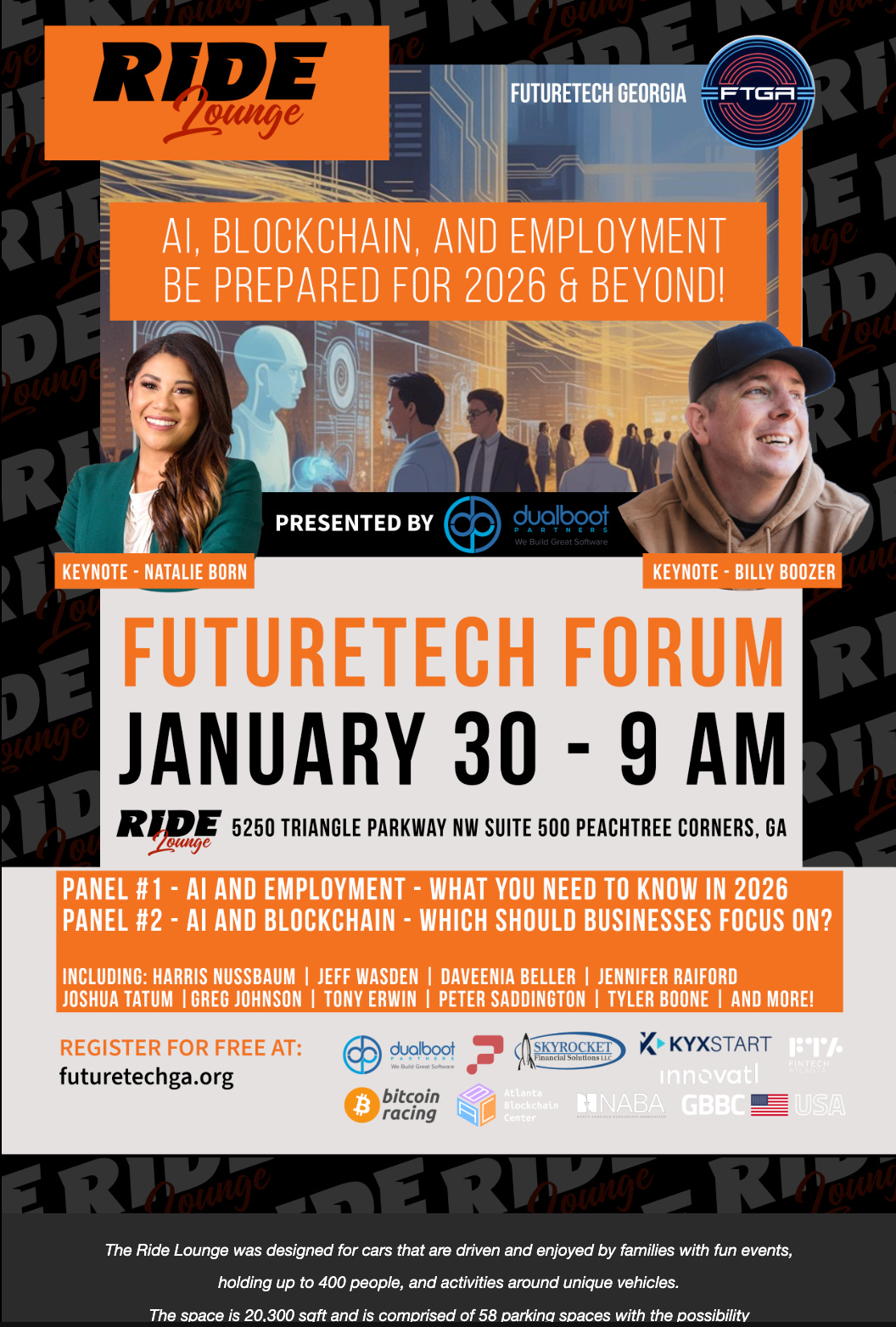
Oh, and if you’re in Atlanta on January 30th. Free. I’m bringing the best on AI. Sign up here so we can feed you. ;)