
AI has irrevocably changed the work of work and ‘Agile’ is effectively over.
Not “evolving.” Not “adapting.” Over.
Agile as a market, where agile coaches and consultants used to thrive, is cooked. The conferences are cooked. The books, the certification mills, the $2,500 two-day workshops where you move sticky notes around a wall, all cooked. Agile has been squeezed of every last drop of economic value by its adherents and practitioners. The evidence is in job titles, certification numbers, and participation rates. Go look. It’s a ghost town dressed up as a community… and conferences are quietly canceling…
Agile, born in 2001, was a product development philosophy. Frameworks like Scrum and Kanban emerged as delivery mechanisms, light guidance on “how to do the work.” And for its era, it was right. The manifesto was a rebellion against waterfall: slow tools, expensive iteration, rigid plans, 200-page requirements documents that nobody read.
But here’s what nobody wants to say out loud: AI eliminated every constraint the manifesto was designed to work around… and now Amazon has officially seo-locked prime brand digital real-estate: AI SOFTWARE DEVELOPMENT LIFECYCLE (AI-DLC).
Beyond Agile: The Rise of the AI-Driven Development Lifecycle (AI-DLC)
Amazon Web Services has introduced the AI-Driven Development Lifecycle (AI-DLC, a reimagined, AI-native methodology designed to move software engineering from human-driven processes to an AI-Driven era where AI orchestrates the entire development process… and in a lot of ways, this is very similar to how I’ve been guiding my clients over the last 3+ years or so…
1. Reversing the Conversation: The “Google Maps” Paradigm
The most fundamental shift in AI-DLC is the [direction of the conversation].
The Old Way: Humans initiate every task and use AI to complete them.
The AI-DLC Way: AI initiates and directs the conversation. It breaks down high-level business goals (Intents) into actionable tasks and proposes recommendations.
The Analogy: It functions like Google Maps. Humans set the “destination” (the intent), and the AI provides step-by-step “directions” (task decomposition), while humans maintain oversight and moderate the journey.
2. From Sprints to “Bolts” (btw, I don’t like this naming)…
AI-DLC replaces traditional, rigid time-boxes with rapid, continuous flow.
Units & Bolts: Systems are broken into Units (independent functional blocks) and developed via Bolts. A “Bolt” is the smallest iteration in AI-DLC, designed for rapid implementation in hours or days, rather than the 4-to-6-week Sprints used in the pre-AI era.
Rapid Cycles: This structure enables hourly or daily iteration cycles while eliminating the “heavy-lifting” of manual coding.
3. Core Rituals: The “Mob” Methodology
AI-DLC introduces collaborative “rituals” to ensure alignment between humans and AI (essentially condensed Scrum):
Mob Elaboration (Inception): All stakeholders (Product Owners, Developers, AI) gather to capture Intents and translate them into Units for development. This condenses weeks of sequential work into a few hours.
Mob Construction: AI recommends design patterns and provides code options, while developers act as validators, making critical decisions to ensure quality and adaptability.
Mob Testing: AI executes all functional, security, and performance tests, proposing fixes for any failures.
4. The New Human Role: Oversight & Strategy
In an AI-DLC environment, the developer’s role transcends traditional silos like infrastructure or backend coding.
Strategic Alignment: Humans serve as approvers and validators, concentrating on risk mitigation, strategic alignment, and high-value decision-making.
Safety & Interpretability: While AI executes the tasks, developers retain ultimate responsibility for validation and ensuring that AI-generated plans comply with organizational risk frameworks.
5. How to Adopt AI-DLC
Transitioning to an AI-native lifecycle doesn’t require extensive training. Organizations can adopt AI-DLC simply by learning by practicing and beginning to slowly experiment with tools.
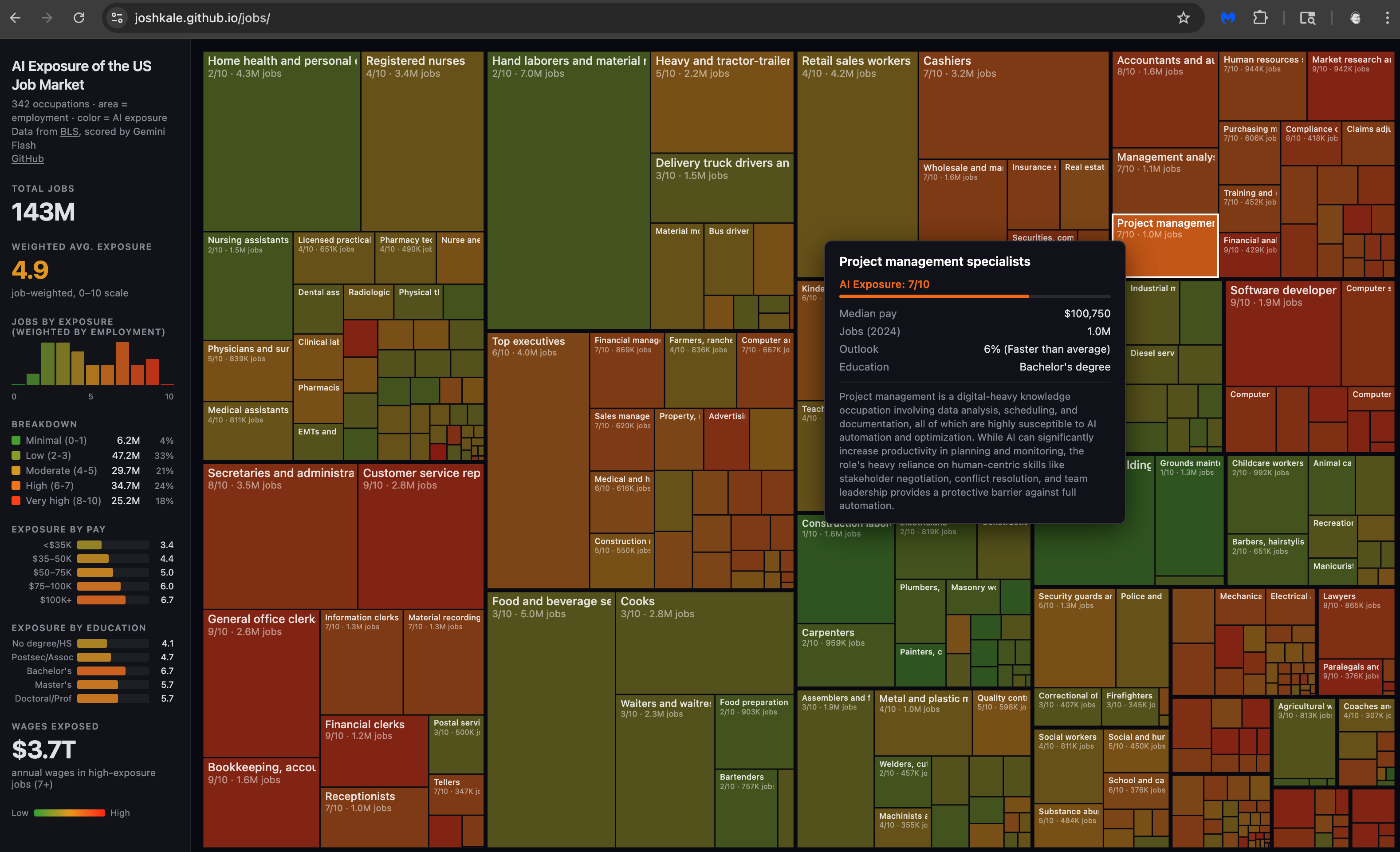
Software quality issues in the US alone were estimated to cost $2.41 Trillion in 2022. By shifting to an AI-native methodology that prioritizes business value and rapid “Bolts” over traditional effort estimation, teams can build better systems faster while maintaining human-centric control…
Is Agile Cooked, Then?
Yes. As I said in my introduction, as a market industry.
Agile, Scrum, Kanban, XP, Crystal, DSDM, Lean, RUP, SAFe, TDD, BDD, etc etc… are all just APIs now.
The four values at the heart of the Agile Manifesto aren’t just outdated. They’re inverted…
1. Individuals and Interactions over Processes and Tools
In 2001, tools were dumb. Text editors, bug trackers, maybe a CI server if you were fancy. People were the bottleneck and the solution. A great developer was 10x a mediocre one, so you optimized for human talent and human communication. Standups, pairing sessions, and whiteboard huddles is how you shipped.
In 2026, AI is the 100x individual. A solo developer with Claude ships what a seven-person scrum team shipped in 2020. The interactions that matter now are increasingly interactions with AI agents, not just with each other. The tools aren’t commodities anymore, they’re the most capable members of the team.
Humans-in-the-loop are still very necessary. But AI has fundamentally shifted how we interact, who we interact with, and what “the team” even means. The manifesto literally says to deprioritize tools. That’s not just wrong now. It’s organizational malpractice.
2. Working Software over Comprehensive Documentation
This was the right call in 2001. Documentation was expensive to write, instantly stale, and nobody read it anyway. Shipping code was the proof: [Show me the working thing].
In 2026, this value isn’t just outdated. It’s false. You can do both with AI. Sufficiently.
But here’s the real inversion: AI generates working software FROM documentation. The better your spec, the better your architecture doc, the better your context file — the better the output. Documentation is no longer a waste product. It’s the input to the production line.
Working software is now trivially cheap to produce. The scarce resource flipped. What we used to call “comprehensive documentation” like PRDs, system specs, and user stories are now the highest-leverage artifact in the entire development process. Specification is the product. Code is the byproduct.
Call it what it really is now: recursive learning loops. You document, you generate, the output informs better documentation, which generates better output. The old tradeoff between “working software” and “comprehensive documentation” doesn’t exist anymore. The manifesto made you choose. AI says “why not both?”
3. Customer Collaboration over Contract Negotiation
In 2001, requirements were unknowable upfront. You couldn’t spec everything in a contract because the customer didn’t know what they wanted until they saw it. So you iterated through the build: demos every two weeks, retros, backlog grooming, story mapping workshops. A whole industry of ceremonies designed to keep the customer in the loop through consistent feedback cycles.
In 2026, AI collapses the feedback loop to minutes. You can prototype five variations of a feature in the time it used to take to schedule a sprint review. You don’t need a Product Owner as a proxy for the customer. You don’t need a two-week sprint to “respond” to feedback. You generate, test, and validate in real-time.
Customer collaboration itself? That increases in value with the rise of AI. Understanding what the customer actually needs matters more than ever. But the Agile apparatus around it — the sprint reviews, the story mapping sessions, the entire scrum master role as collaboration facilitator — that’s the part that’s cooked. The collaboration is valuable. The ceremony is dead weight.
And contracting? That’s going to change too. Contract negotiation will evolve into OAuth calls, API integrations, and webhook handshakes. The human-heavy negotiation cycle gives way to machine-readable agreements and programmatic collaboration. The manifesto’s framing of this as a binary choice already feels like it’s from another century. Because it is.
4. Responding to Change over Following a Plan
This was the crown jewel of Agile. The whole philosophy started here: plans are rigid, change is inevitable, so embrace it. Stop pretending you can predict the future and start adapting.
In 2026, responding to change is just a human thing we all have to do. It’s not a competitive advantage. It’s not a philosophy. It’s breathing.
What’s actually scarce now is the opposite: following a plan. Specification is key to output quality. AI made change so cheap that teams change everything all the time with no strategic direction. You get fifty pull requests a day that each “respond to change” but collectively make the codebase incoherent. Without architectural intent, without a clear specification, without constraints, AI-accelerated development becomes AI-accelerated chaos.
Following a plan is the new competitive advantage. Having a coherent vision, a real specification, a set of constraints that guide the AI, that’s what separates teams that ship from teams that thrash. The manifesto told you to deprioritize planning. In the age of AI, that’s how you build a disaster at unprecedented speed.
The Punchline Includes Trad Project Managers Too
The Agile Manifesto was a product of its time. It solved real problems in 2001: slow tools, expensive iteration, rigid processes, disconnected customers. Every one of those constraints has been eliminated by AI.
What’s left is a process religion.
The manifesto asked you to value the left side over the right side. AI made the right side either free, automated, or more important than the left. Every. Single. Line.
Scrum without AI is just meetings. The Agile philosophy without AI is misleading. To build anything today without AI is negligence.
Best,
ps
I made an ai-manifesto to serve as a principle-based guide for my personal building and client work. Check it out if you’re curious. Also, don’t think I haven’t considered the death of my ‘old work.’ I spent 20+ years in Agile/Scrum… we must evolve. The coach and consultant today must be AI-enabled.