A decade ago, Sam Altman released his first version of “How to Start a Startup” at a Y Combinator startup talk at Stanford University. While his talk has been translated, edited, and updated, the core of his thesis has relatively stayed the same… the only difference is that he now drives a $4M Koenigsegg Regera.
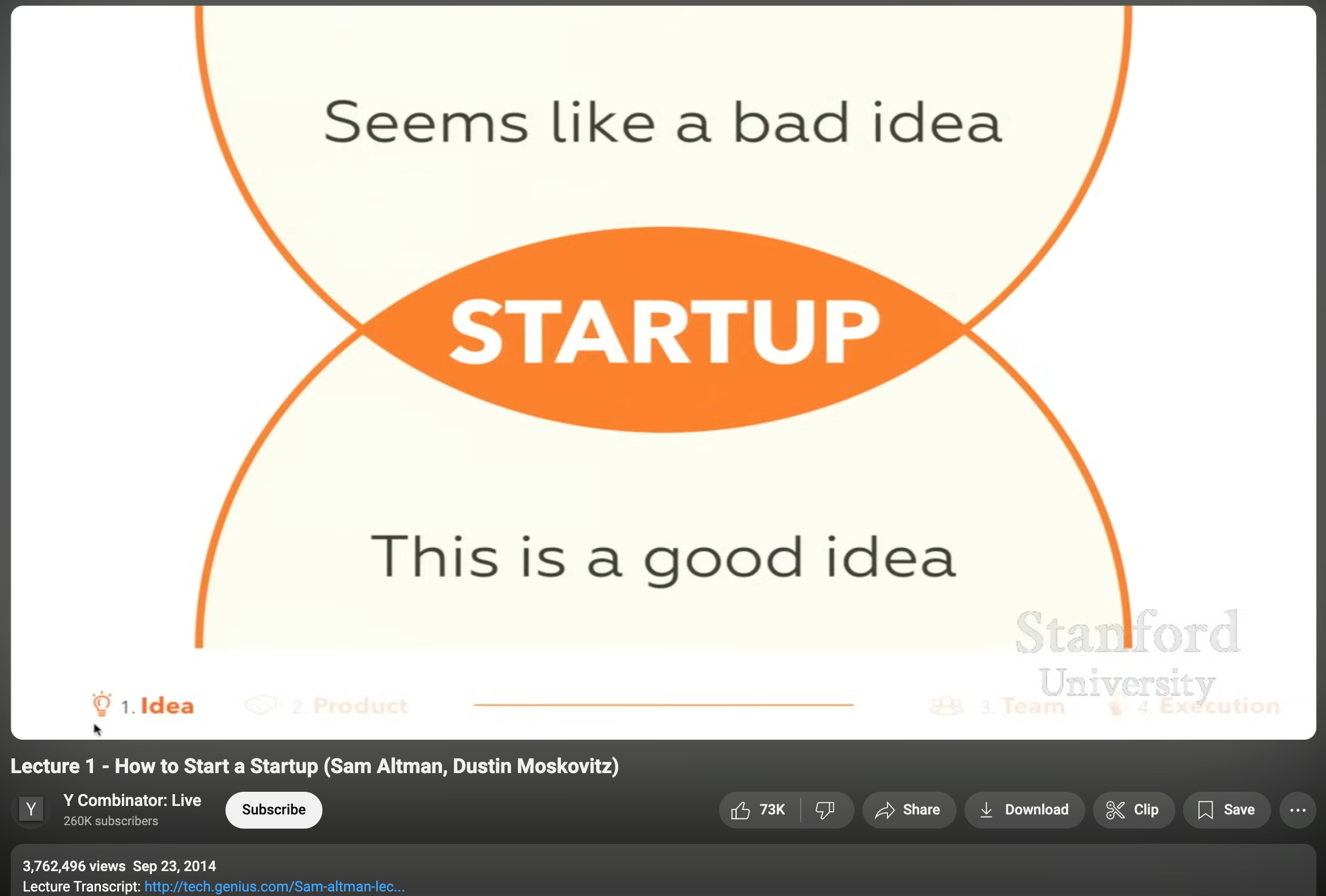
Sam’s 4 Points for Startup Success Distilled:
What you need to maximize startup success: 1) a great idea 2) a great product 3) a great team 4) great execution.
Great idea:
Wait to start a startup until you have an idea you feel compelled to explore
If you have several ideas, work on the one that you think about most often when you're not trying to think about work
The best companies are almost always mission oriented
You'll get more support on a hard, important project, than a derivative one
You want something that sounds like a bad idea, but is a good idea
You need a market that's going to be big in 10 years
Great product:
Until you build a great product, nothing else matters
It's better to have a small number of users who love your product than many who like it
One way that you know when this is working, is that you'll get growth by word of mouth. If you get something people love, people will tell their friends about it.
Start with something simple to make it easier to create a great product
Successful founders are fanatical about quality and details
Great team:
The number one cause of early death for startups is cofounder blowups
College is a great place to meet potential cofounders or working at a company
The best teams usually have of two or three co-founders
You want to be proud of how much you can get done with a small numbers of employees
If you compromise and hire someone mediocre you will always regret it
Three things to look for in a hire: 1) Are they smart? 2) Do they get things done? 3) Do I want to spend a lot of time around them? - Sounds like #MEI.
Great execution:
Execution for most founders is not the most fun part of running the company, but it is the most critical
Execution gets divided into two key questions: 1) can you figure out what to do 2) can you get it done.
Two parts of getting it done: 1) focus 2) intensity
The five jobs of a CEO: 1) set the vision 2) raise money 3) evangelize the mission to people you're trying to recruit 4) hire and manage the team 5) set the execution bar
Don't worry about a competitor at all, until they're actually beating you with a real, shipped product
Momentum and growth are the lifeblood of startups.

I appreciate all of these ideas. Succinct. Execution-oriented, and build-build-build.
I guess if we all did this well, we’d be driving in style too.
All the best,
ps